
It is easy to think you should choose the perfect place on your own. In practice, that often means guessing at someone else’s tastes and stress points until the plan gets heavier than the date.
What to remember todayPlanning together is usually better because it makes room for real preferences, practical limits, and mutual choice.
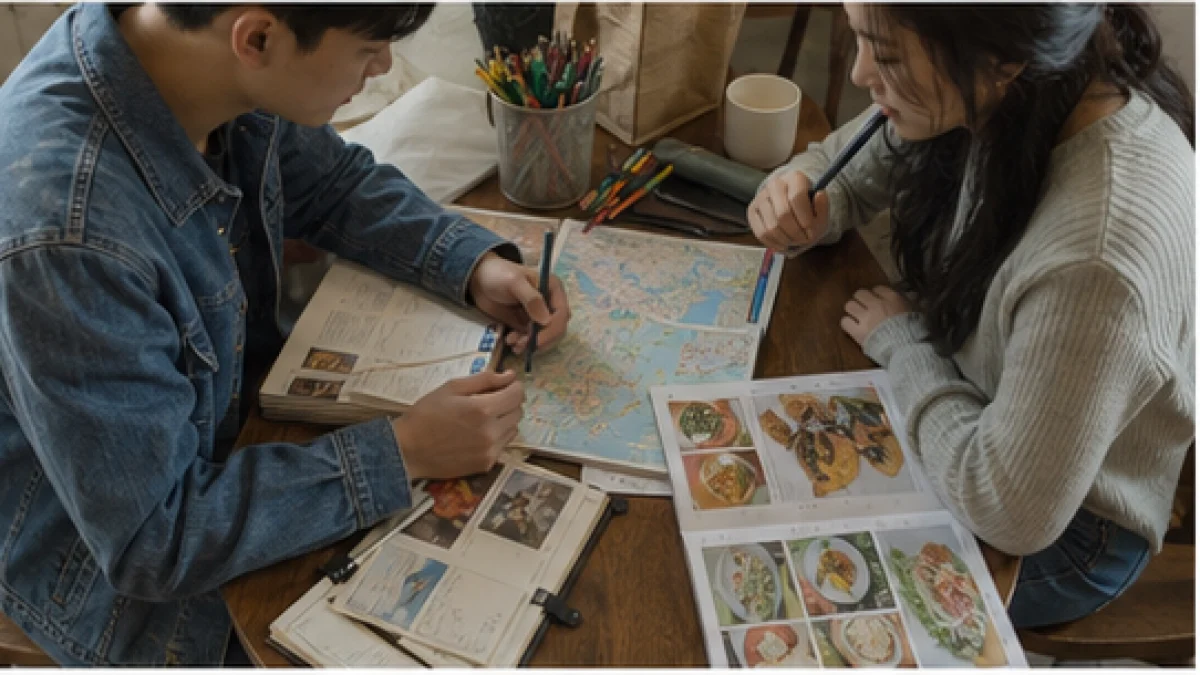
Stop trying to read minds
You do not need to guess the exact right restaurant or activity from scratch.
A quick conversation usually gives enough information to make a solid plan.
Ask about practical needs directly
Food preferences, dietary restrictions, disability needs, sensory comfort, budget, timing, and transit are all fair things to mention.
No one should have to pretend those details do not matter just to keep the mood light.
Offer a bounded set of choices
Give two or three options instead of an open-ended “whatever you want.”
Bounded choices make it easier to agree without turning the plan into homework.
Budget and transportation should be visible
If one place is too pricey or too hard to reach, say that plainly before the plan is locked in.
Good planning is not just romantic. It is respectful of time, money, and energy.
Shared choice is not a burden
Asking for input does not make you less thoughtful.
The goal is to build a plan that works for both people, not to impress through guesswork.
When words are hard to find
- Do you prefer coffee, food, or something active?
- If there are any food, budget, or access needs I should know about, tell me.
- I’d rather choose something together than guess wrong.
Responses that make things harder
- Hiding real constraints to seem easygoing
- Choosing a place before asking about access needs
- Treating the other person’s preferences like a nuisance
Write a planning text that asks about one preference and one practical need in plain English.
Before you decide
- Did I ask about real needs, not just taste?
- Did I keep the choice bounded?
- Did I make budget and transit easy to name?