
Sometimes you are not in love with the person as they are. You are in love with the version that appears when you fill in the blanks: the one who might text more, care deeper, show up better, or finally become the thing you keep hoping for. That version can feel real because it is built from your own longing.
What to remember todayLetting go of the fantasy version means comparing imagined traits with observed behavior and choosing clarity without self-shame.
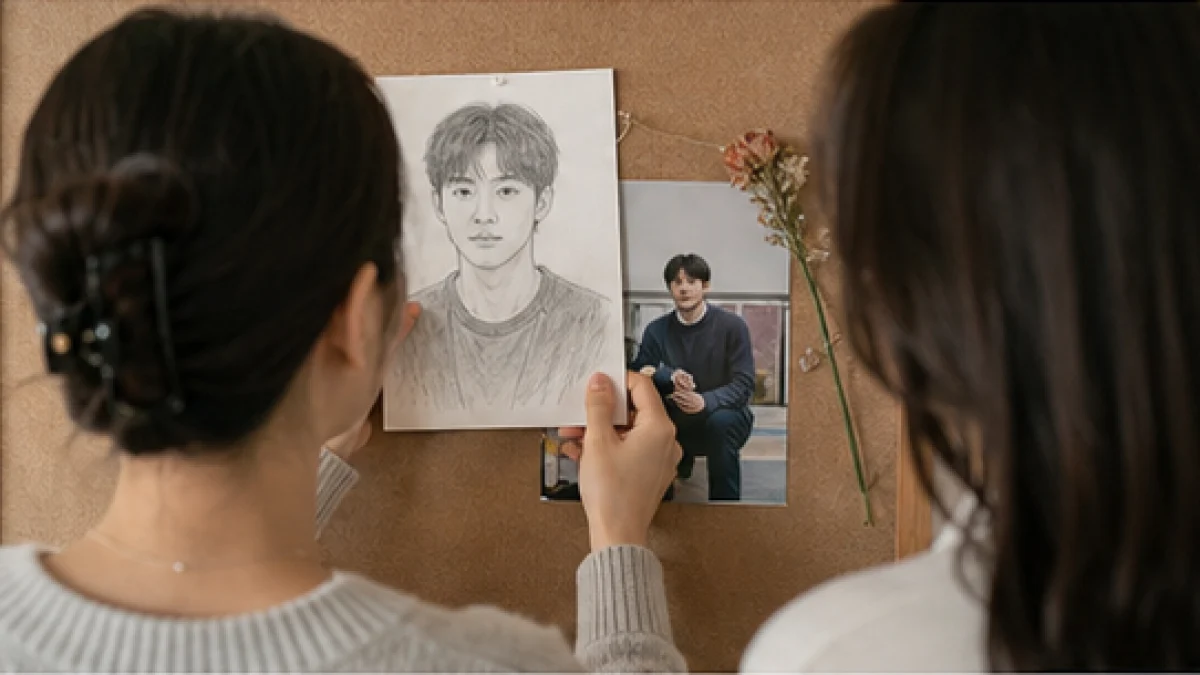
Name the difference between observed and imagined
Observed behavior is what they actually did: how they communicated, repaired, followed through, and respected your boundaries.
Imagined behavior is the version your mind supplies when you want the story to become kinder than the evidence allows.
Do not shame yourself for hoping
Hope is not stupidity.
You were trying to make sense of someone you cared about. The goal now is not self-blame. The goal is to stop paying for a story that keeps outrunning reality.
Compare the fantasy to the pattern
Ask whether the version you love is supported by repeated action or just by occasional moments you replay in your head.
If the pattern never matches the fantasy, the fantasy is doing work the relationship is not doing.
Let grief be part of the release
Letting go can feel like losing someone who never fully existed, and that can still hurt.
You are grieving both the person and the hope. That is real, and it does not mean you failed.
Choose the person who is actually here
A future built on potential alone is not stable enough to live in.
The honest choice is to respond to the real person in front of you, or step away if the real version cannot meet your needs.
When words are hard to find
- I think I have been loving what I hoped you could be more than what has actually shown up.
- I do not want to punish myself for hoping, but I do need to look at the pattern honestly.
- I am going to stop comparing the dream to the evidence and decide based on what is real.
Responses that make things harder
- Clinging to potential instead of behavior
- Shaming yourself for being hopeful
- Using one good moment to overwrite a long pattern
Write two columns: what you imagined, and what you actually observed. Circle the items that show up repeatedly in the second column.
Before you decide
- Am I comparing fantasy to evidence?
- Have I separated hope from what is actually happening?
- Am I letting grief exist without turning it into shame?
- Do I know what the real version of this person requires from me?