
You put on a lipstick you loved at the store, then look in the mirror and wonder why your lips are arriving before the rest of your face. It can make the whole look feel disconnected. That does not automatically mean the color is wrong. It may just be too full-strength for the rest of the makeup, lighting, or outfit.
What to remember todayBefore replacing the lipstick, test it sheerer, blur the edges, and bring the rest of the face slightly closer in contrast so the lip color feels connected instead of isolated.
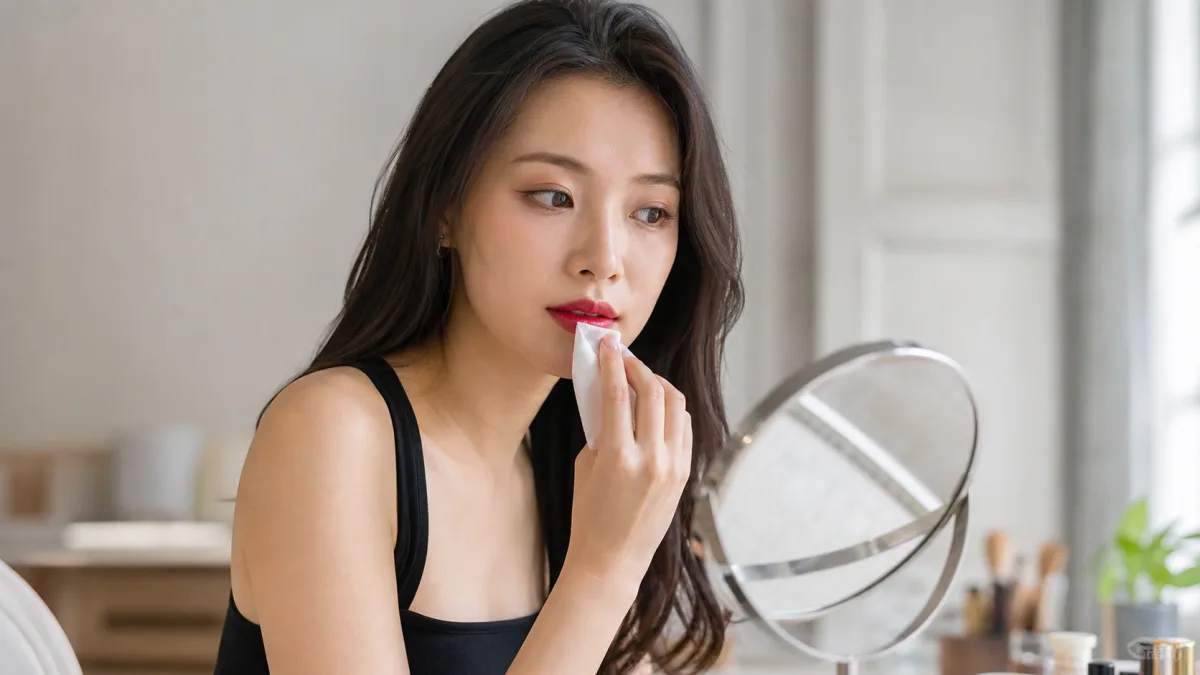
The issue is often intensity, not the shade name
A medium red can look understated when dabbed on and dramatic when packed on. The same goes for pink, berry, nude, and brown tones. Color names do not tell you how hard the product will hit once it is on your face.
If the lip is much brighter or darker than the rest of your makeup, it can pull the eye straight to the mouth. On a diverse range of skin tones, that contrast can be beautiful or distracting depending on how much balance the rest of the face has.
Use less product before you use a different product
Try tapping the lipstick on with a finger, then blending the edges so the color starts softer in the center. A thin layer often looks more modern and more wearable for daytime.
Blotting once with tissue can also lower the shine and reduce the “I can see the lipstick before I see you” effect. If the formula is very matte, a little balm underneath can keep it from looking sharp and dry.
Bring the rest of the face into the same neighborhood
If the lips are strong, the brows and skin usually need a little more presence too. That might mean a slightly fuller brow shape, a touch more blush, or cleaner skin coverage around redness and under-eye shadows.
You do not need to stack on more makeup everywhere. You only need enough connection so the lip color feels like part of the whole face instead of a separate object.
Check comfort and skin response at the same time
If the product stings, flakes, or makes the lips itch, that is not a style issue. Stop using it and check the label, especially if the formula is new or you have sensitive skin.
A color that works on one day may also need more or less opacity depending on weather, dryness, or how much base makeup you are wearing. Treat the application as adjustable.
Say it clearly and briefly
- I like the shade. I just need to sheer it out a little.
- The lipstick is doing too much right now, so I am going to soften the edges.
Responses that make things harder
- Adding more eye makeup just because the lips feel loud
- Ignoring stinging or swelling and calling it a styling problem
Try the same lip color three ways: full strength, blotted, and tapped on lightly, then pick the version that keeps your face most balanced.
Before you decide
- Did I test the lip color with less product first?
- Did I blur the edges before abandoning the shade?
- Did I bring the rest of the face into better balance?
- Did I stop if the product irritated my skin?