
It is frustrating when one consultation calls you warm and bright, while another leans cool and soft. After spending money on clothes or makeup, it can feel like the whole system is unreliable. But different results do not automatically mean someone was wrong. They often mean the tests were done under different conditions or with different priorities.
What to remember todayInstead of trying to force every result into one season name, look for repeated strengths: the brightness level, the amount of contrast, and the colors that consistently drain the face.
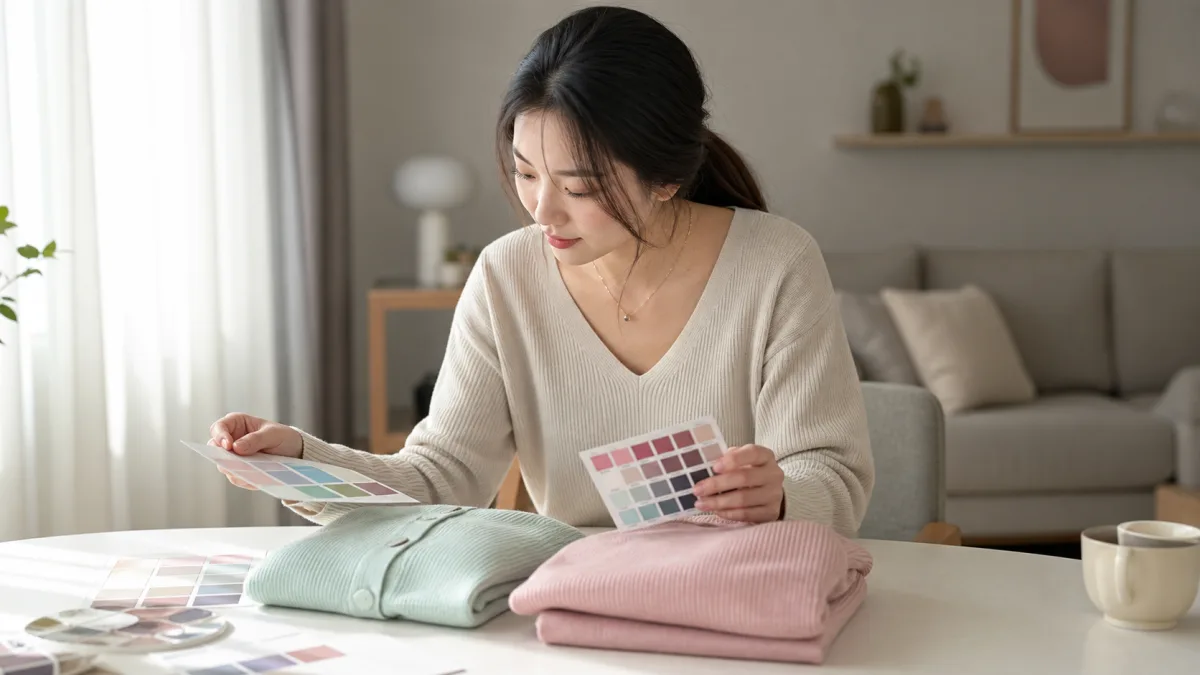
Different methods can read the same face differently
Lighting, skin condition, foundation, hair color, and lens color can all change the appearance of the face. Some systems lean more on warmth, while others pay more attention to brightness or softness.
That is why two serious-looking results can still disagree without either one being useless.
Find the shared notes, not just the label
Lay the two results side by side and circle the repeated advice. Maybe both say to avoid very dark colors, or both say that muted colors flatten you, or both point toward cleaner medium-bright shades.
Those shared notes are more useful for shopping than the season name itself.
Test the clothing you actually own
Pick one top from each result that you already own and compare them under the same light. Watch the under-eye area, mouth corners, and overall balance instead of asking which one looks more “correct.”
If possible, take the comparison outside and look again in daylight, because store lighting can hide a lot.
Make your own working rules
You do not need to solve your color identity before getting dressed. A short personal rule like “keep the face area medium-bright and avoid very muddy colors” is often enough.
If the result keeps changing, the solution may be a smaller, more practical rule set rather than another round of analysis.
When words are hard to find
- Can we compare what both results agree on instead of arguing about the label?
- I want to know which top makes my face look more rested, not which one sounds more like a season.
Responses that make things harder
- Buying a new wardrobe every time a result changes
- Treating a season label as more important than the actual face test
Write down the three color qualities that keep showing up across results, then test them on clothes you already own.
Before you decide
- Did I look for repeated color qualities across results?
- Did I compare clothes in the same lighting?
- Did I avoid treating seasonal analysis like hard science?