
Your partner seems down, and the instinct is to troubleshoot: ask questions, offer solutions, cheer them up, and keep pushing until the feeling changes. But not every low mood is a problem you are supposed to solve.
What to remember todayAsk what helps, stay present, and remember that persistent or severe mood concerns need broader support than one relationship can provide.
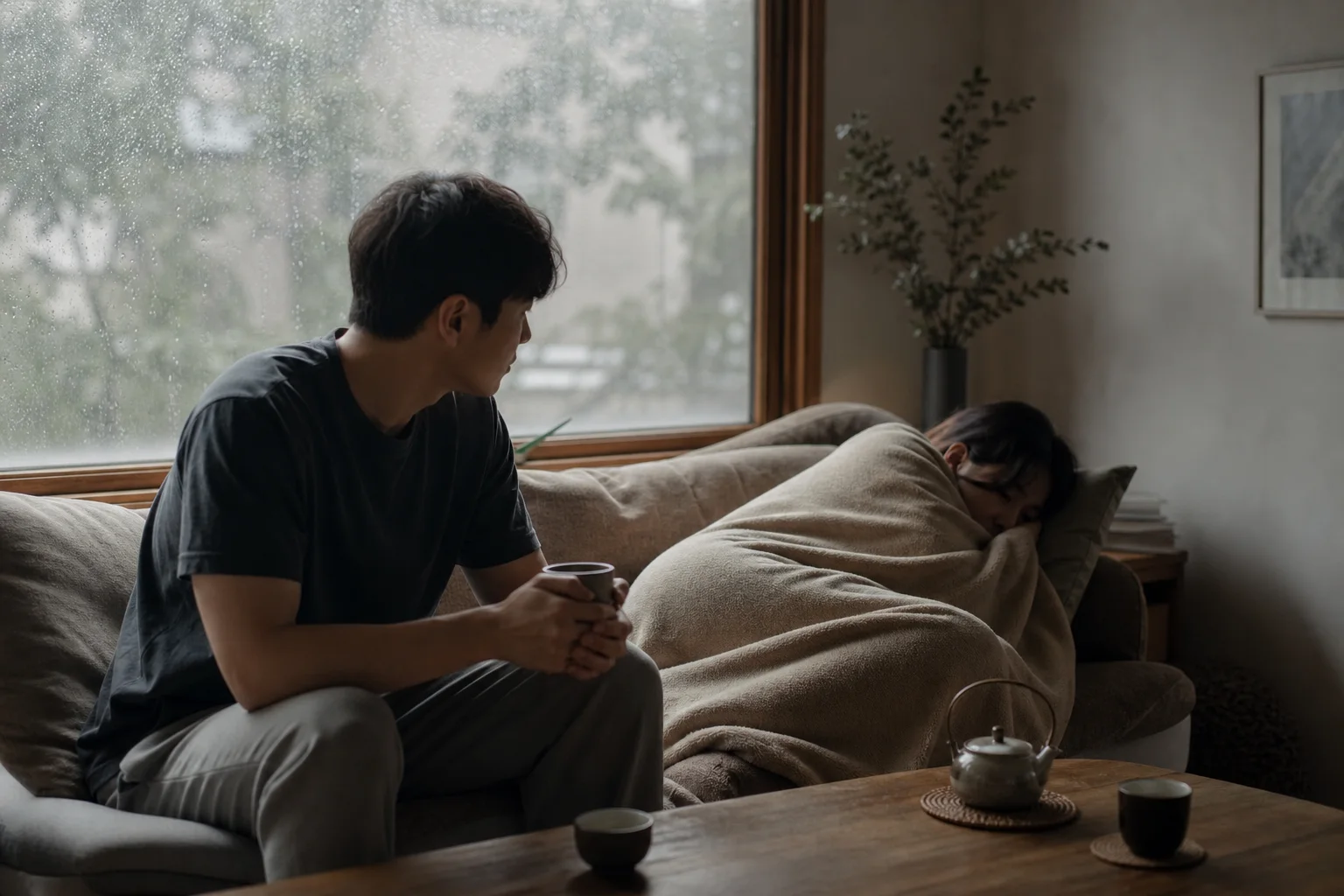
Presence is already useful
Sometimes the most helpful thing is sitting with someone, listening, and not trying to force them into being okay on your schedule.
A low mood does not always need a fix in the moment; it may need patience, care, and room to pass.
Ask what kind of support actually helps
The answer may be food, quiet, a walk, a hug, distraction, or space.
Guessing can turn care into pressure, especially when the person is already worn out.
Do not become the sole regulator
A partner can support emotional health, but they cannot be the entire system holding it together.
If you start believing you must cheer, repair, analyze, and stabilize every dip, the relationship will get heavy for both people.
Persistent or severe struggles need wider support
If the low mood is lasting, getting worse, or making daily life hard, encourage qualified help and a broader support network.
That is not rejection. It is a realistic recognition that love alone is not a treatment plan.
You can stay present even when the mood does not improve
When a partner looks low, it is tempting to arrange fun or solve the cause. If they do not brighten, your help can start to feel rejected. Ask whether they want solitude, quiet company, or practical help, then stop checking for an immediate result.
The helper's capacity has limits too. If love seems to require canceling your plans and managing another person's life, name what you can actually offer. If low mood persists or seriously disrupts sleep, eating, or daily life, one partner's care is not enough. Encourage professional support without taking over every appointment or responsibility for recovery.
When words are hard to find
- Do you want comfort, space, or something practical right now?
- I am here with you, and I do not need you to get happy on my schedule.
- If this keeps feeling heavy, I want us to look at getting more support too.
Pause when emotions rush you
- Turning every low mood into your responsibility
- Pushing cheerfulness when presence would help more
- Assuming love alone should solve persistent or severe struggles
The next time someone seems low, ask one question about what would help before offering solutions.
Before you decide
- Did I ask what helps instead of guessing?
- Did I stay present without trying to control the mood?
- Did I avoid taking sole responsibility?
- Did I encourage broader support when needed?